Challenge
An immersive environment depends on more than its outer appearance. Curved surfaces, structural frames, openings, illuminated marks and interior features all have to meet as physical parts while carrying a consistent visual language.
Brand Environment / Multi-Material Fabrication
From open steelwork and curved metal components to illuminated identity and an immersive interior. A closer look at the fabrication behind a branded environment.
 See the production sequence
An immersive environment depends on more than its outer appearance. Curved surfaces, structural frames, openings, illuminated marks and interior features all have to meet as physical parts while carrying a consistent visual language.
The project record follows distinct fabrication layers: open frame assemblies, curved metal-clad components, on-site assembly and the completed illuminated environment. Each layer makes a different part of the build visible.
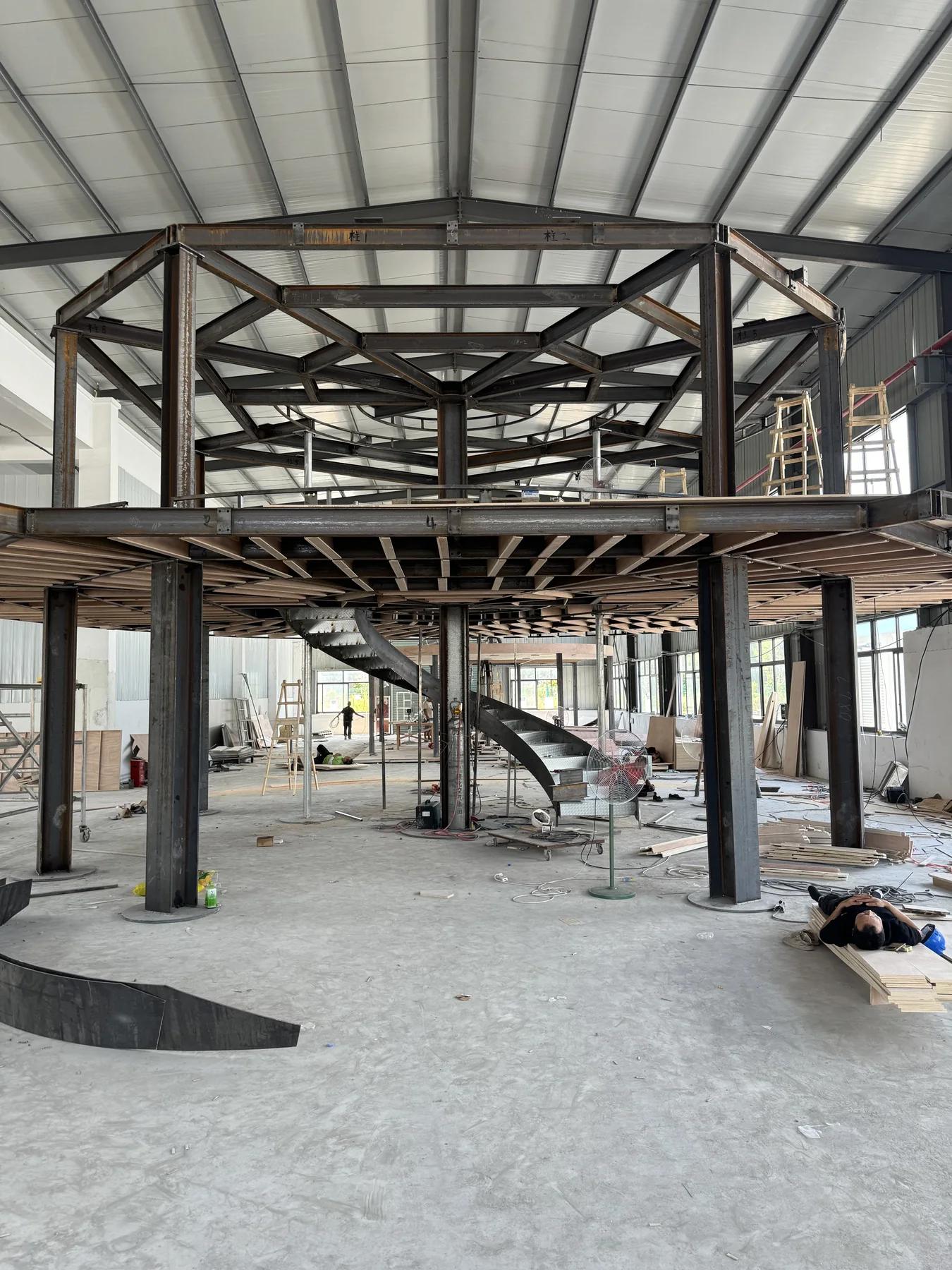
The exposed frame and unfinished components show the relationship between support geometry, panel edges and access openings. These are the interfaces a fabrication team needs to resolve before surfaces and lighting are brought together.
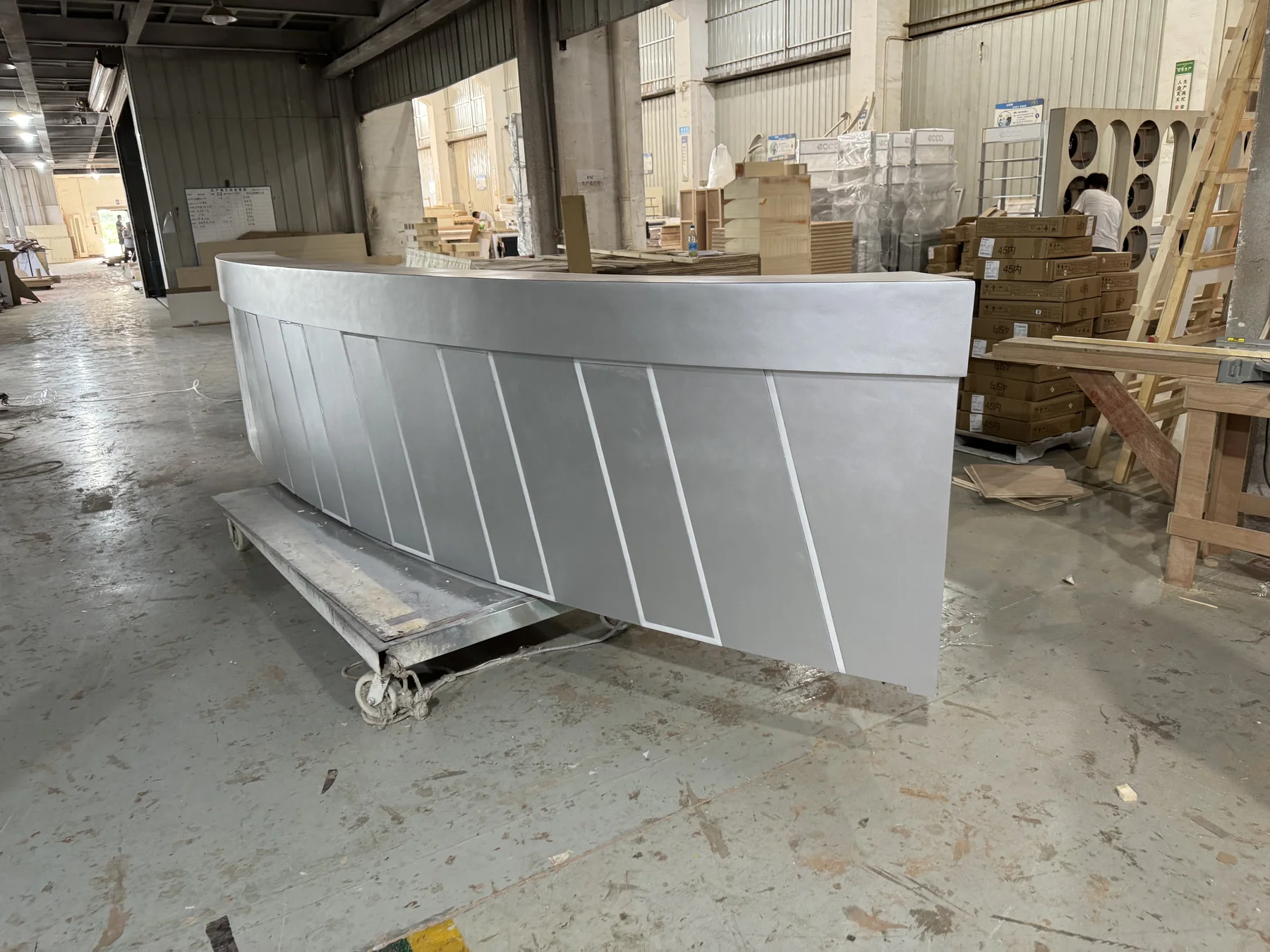
Workshop photographs show frame pre-assembly and curved component fabrication. Site photographs then show those larger assemblies alongside the installation of branded elements; the finished views bring the surface and lighting details into context.
The documented sequence reaches site assembly and the completed event environment. For a comparable U.S. project, module sizes, protection, receiving sequence and local installation responsibilities would be agreed with the appointed project team before production release.
Inside the build
Follow the same project from exposed structure to curved components, site assembly and illuminated identity. Each view shows a different physical layer of the build.
An open frame assembly makes the support structure, connection points and overall form visible before the finished surfaces are added.
Curved metal-clad sections are shown during workshop fabrication, with panel divisions and component edges still accessible.
The site-stage image shows the frame, outer surfaces and working access together before the completed environment is presented.
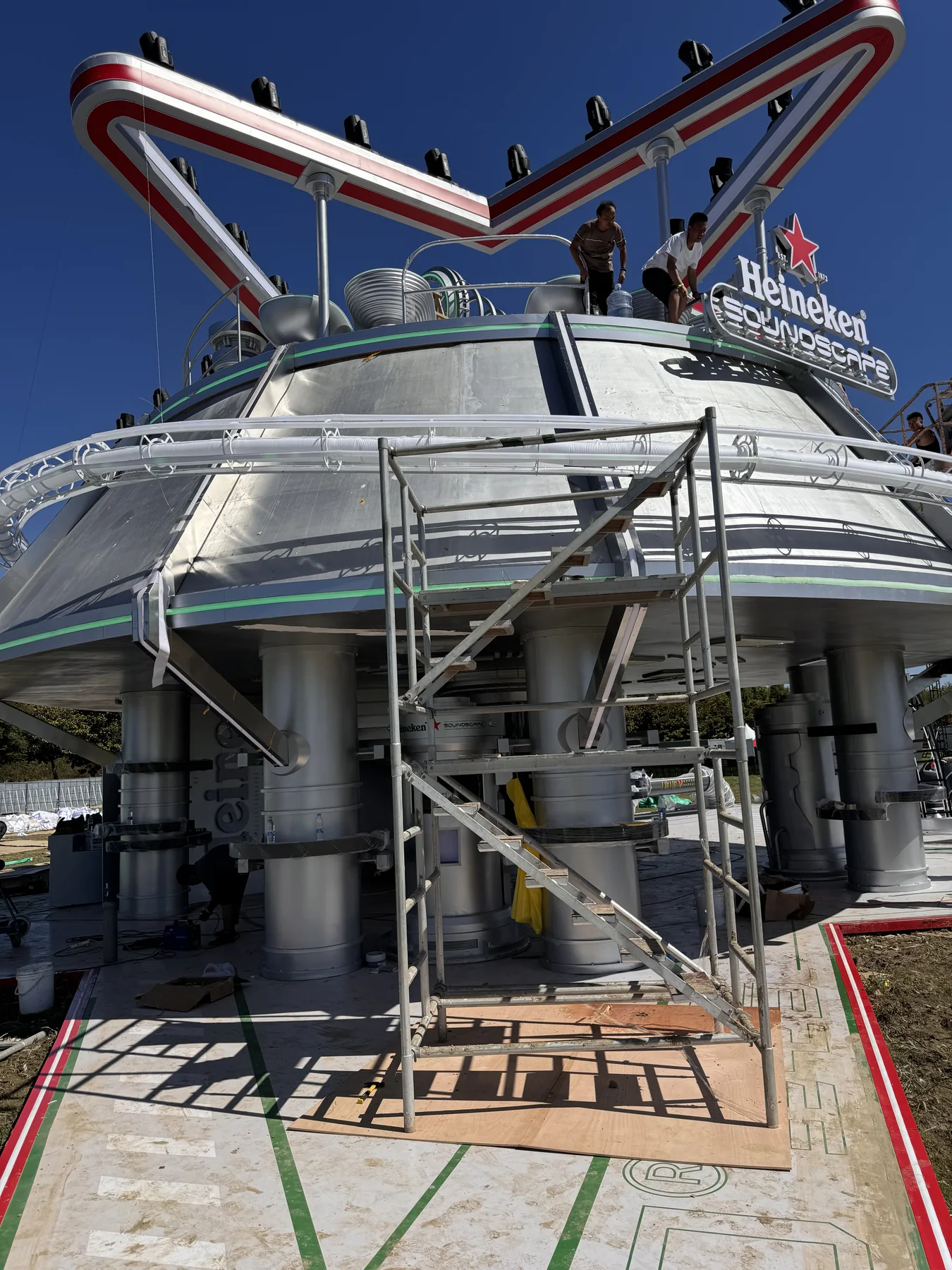
Dimensional lettering and illuminated outlines sit within the curved facade. The close view connects the identity detail to the surrounding structure.
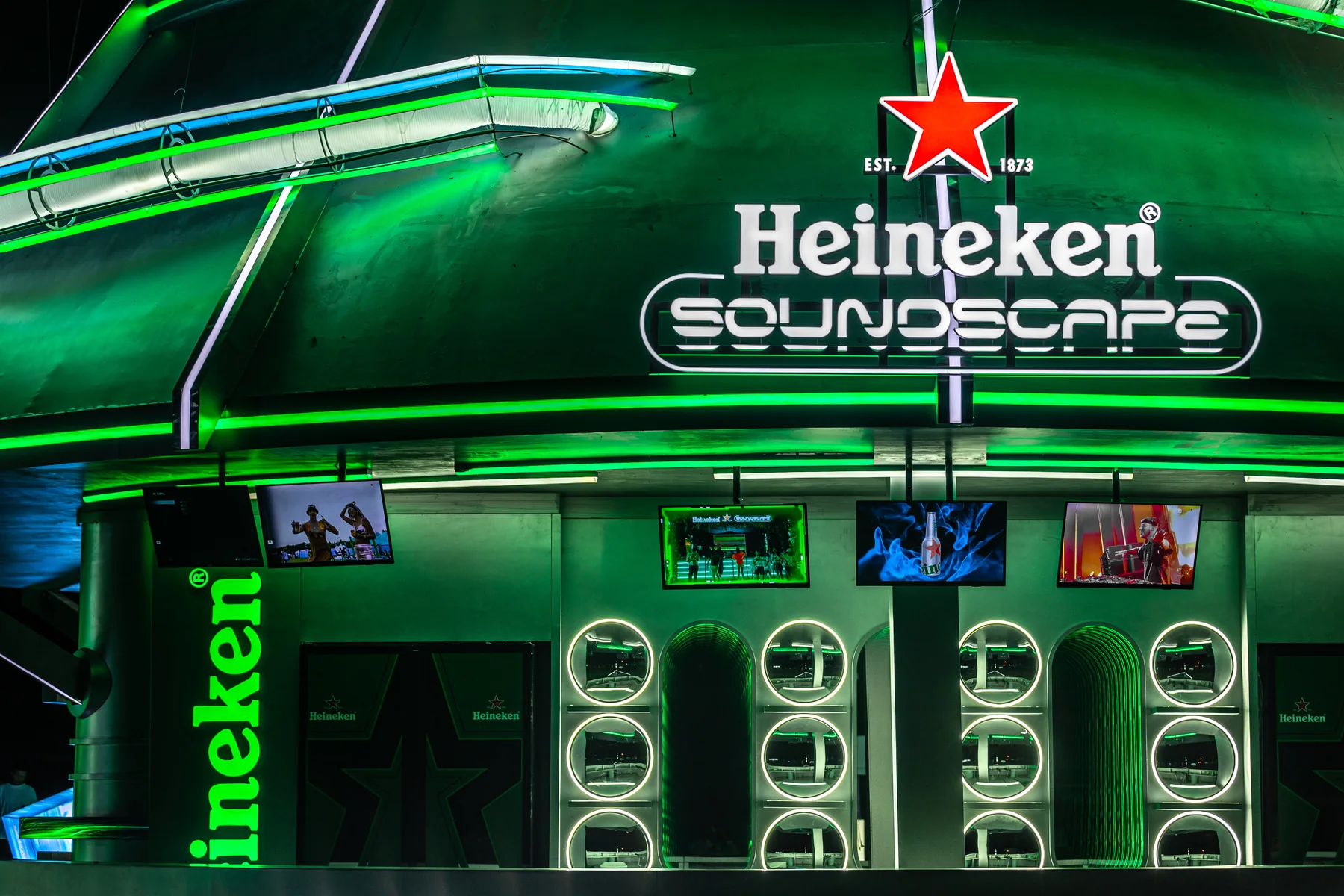
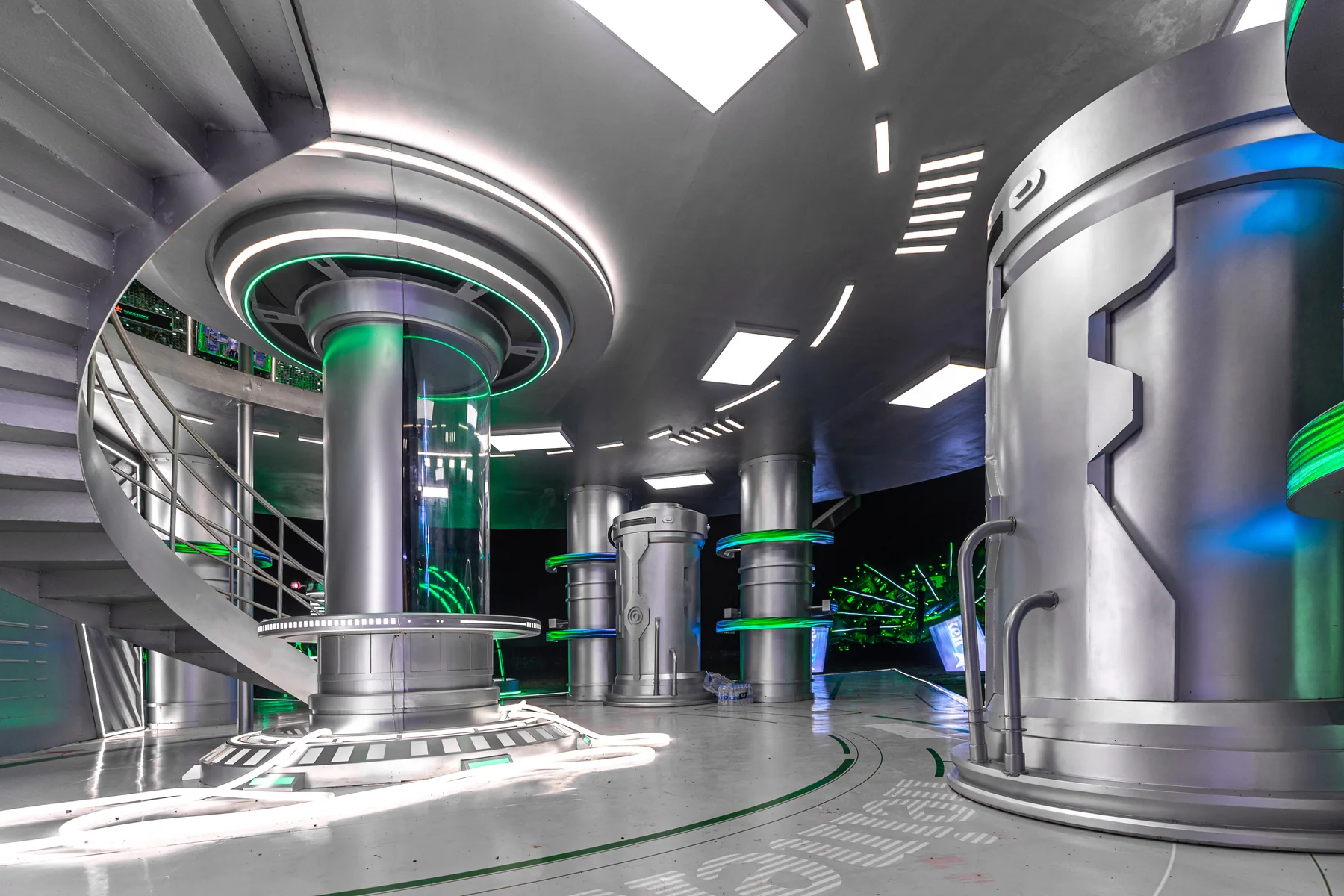
Metallic surfaces, curved features, graphics and light read together inside the completed environment.
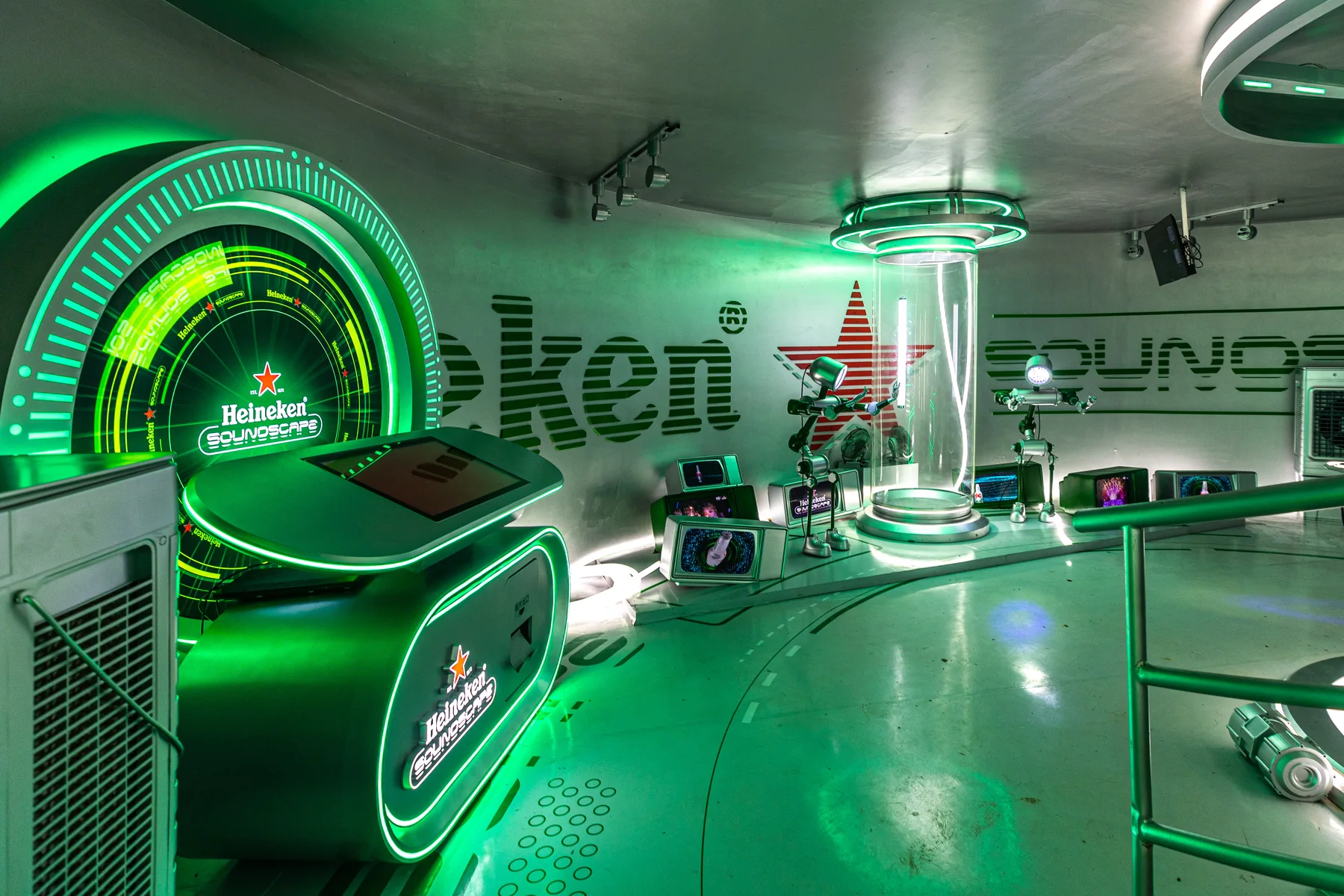
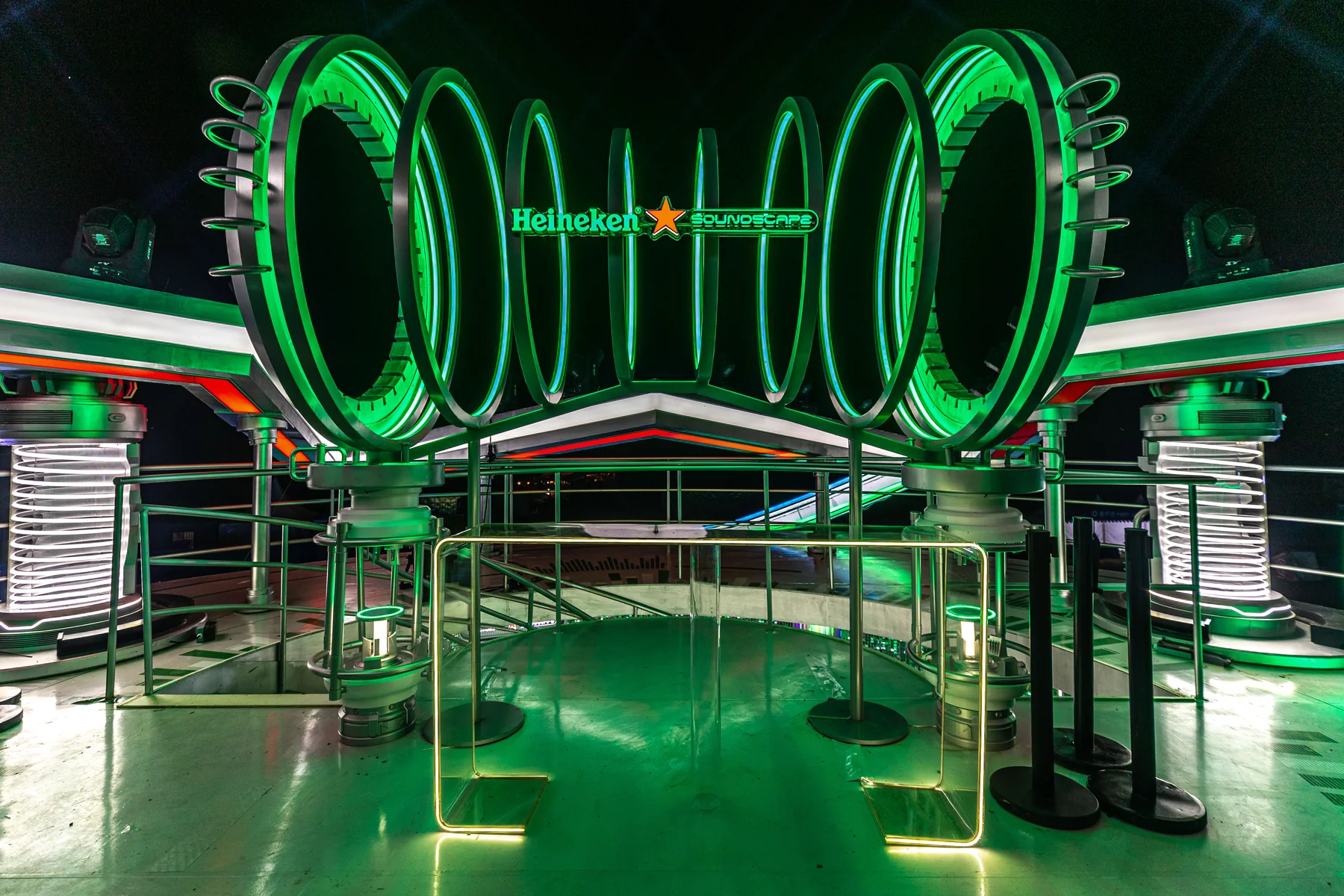
Project-archive photographs supplied by the Shanghai production team. Brand marks identify the depicted environment; they do not imply direct brand appointment or endorsement. This case focuses on the documented fabrication and site-assembly stages.
The next step starts with your idea.
Send an approved concept, drawing set or project brief. We’ll review the information and recommend the right next step—from clarification and engineering review to prototype development or a preliminary estimate.
Project inquiries are typically reviewed within one business day.